


Nylon nuts and bolts are lightweight, corrosion-resistant, and surprisingly strong. They’re widely used across signage, transport, electrical, and vehicle-based installations where rust or conductivity can cause problems. While not as rigid as metal fixings, nylon fasteners offer distinct advantages in the right setting, especially when weight, moisture or chemical exposure are factors.
At Lettercraft Top Signs, we don’t just provide high quality top signs for a wide range of vehicles and professions – we also supply many accessories to keep them firmly attached and well maintained. We have created this guide to nylon nuts and bolts (commonly used in top sign installation) so you know what to expect with these useful fastenings.

Nylon vs Metal Fasteners: Material Properties
When choosing between nylon and metal fasteners, it helps to understand how each material behaves under stress, exposure, and over time.
Nylon Fasteners:
- Made from durable thermoplastic
- Non-conductive and corrosion-resistant
- Strong enough for light to medium load applications
- Do not rust, swell or pit
- Flexible under vibration and movement
Metal Fasteners (e.g. steel or brass):
- High tensile and shear strength
- Susceptible to corrosion unless treated or plated
- Conductive (not suitable near electronics or wiring)
- Heavier than nylon
- Can seize or bind in damp or reactive environments
Metal fasteners remain the stronger option for heavy loads and high temperatures. However, nylon performs well in non-structural roles where environmental durability matters more than raw strength.
Application-Specific Performance
Nylon nuts and bolts are ideal for signage work – mainly when used on vehicles or outdoor installations. Their resistance to rust and water makes them well-suited to taxi plates, temporary signs, and areas exposed to frequent washing or road spray.
In particular, plastic fixings provide a reliable hold in applications where galvanic corrosion could otherwise weaken a metal fastener over time. They’re often chosen for use on number plate brackets, plastic guards, or insulated panels where a metal fastener would be overkill or a liability.
Because nylon can handle light mechanical loads while resisting many solvents, oils and salts, it’s a good choice for settings where mild chemical exposure is expected, such as vehicle cleaning or winter grit.
Are Nylon Nuts Effective Against Bolt Loosening?
Nylon nuts, particularly nylon-insert lock nuts, are specifically designed to resist loosening under vibration and movement. This makes them especially useful for number plates, display signs and panels exposed to regular travel or wind pressure.
The nylon insert inside the nut adds resistance by binding slightly to the threads of the bolt. This increased friction helps keep the nut in place without needing a thread locker or regular re-tightening. Even under vibration or repetitive motion, nylon nuts maintain a firm grip – making them ideal for both metal and nylon bolts.
That said, nylon’s temperature resistance is limited. These fasteners can begin to deform under continuous heat above 100°C. For high-heat or load-bearing needs, a different fixing system may be required.
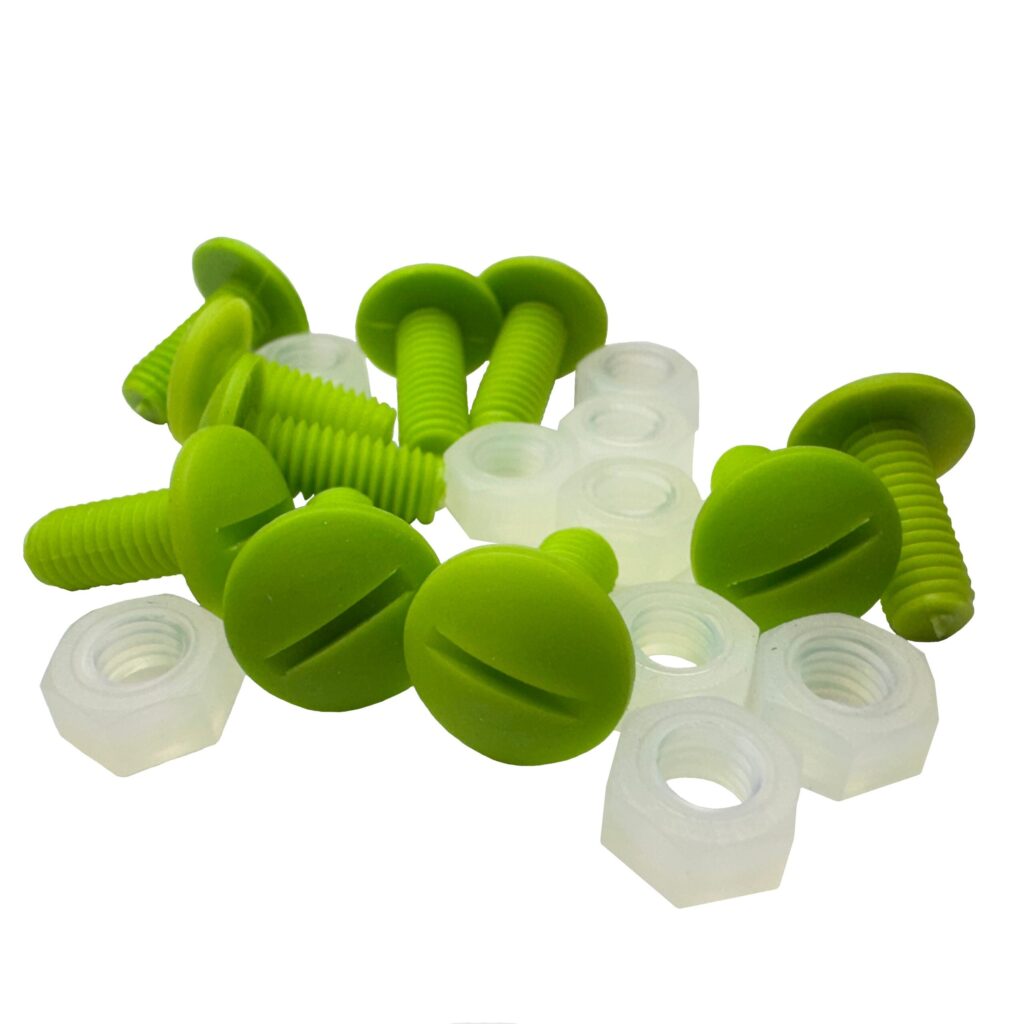
The Advantages of Nylon
If you’re fitting plates or signs in exposed, reactive or lightweight environments, nylon fasteners offer a smart solution that simplifies fitting and resists corrosion from day one. Some of the key benefits include:
- Lightweight and easy to install
- Won’t rust, seize or stain surfaces
- Safe to use near electrical fittings
- Vibration-resistant when paired with nylon nuts
- Resistant to many solvents, salts and oils
- UV-stable options available for outdoor use
For everyday signage work, particularly in vehicle-mounted or exterior-facing applications, nylon fixings offer a low-maintenance, fuss-free choice. You don’t need to grease them, they don’t require anti-seize coatings, and they’ll hold reliably through seasonal temperature shifts and damp.
Which Bolt Locking Product Should I Use?
If your main concern is preventing a bolt from working loose over time, we recommend using a nylon insert nut rather than relying on thread lock or split washers. The integrated design means fewer parts, faster fitting, and less chance of installation error.
For even better results in vehicle applications, match your fixings to their surroundings. For example, using our nylon nuts and bolt pack ensures that each part has the same flexibility, resistance and compatibility – so you avoid issues with mismatched materials causing binding or stress cracks.
As a topsign manufacturer trusted by taxi drivers and driving instructors across the UK, we use nylon fixings to reduce callbacks, speed up fitting, and keep installations reliable in all conditions.
For more information, contact Lettercraft Top Signs now
Whether you need a handful of nylon bolts or a full pack of vibration-resistant fixings, we’re here to help. At Lettercraft Top Signs, we supply everything you need to fit signs securely, legally and without fuss. If you’re unsure which type of fixing suits your setup, get in touch with our team today and we’ll point you in the right direction.
0 Comments for “How Strong Are Nylon Nuts and Bolts?”